Retail displays need to attract attention, support merchandise and represent the brand, but they also need to meet practical production budgets. Value engineering is the process of reviewing a design to find more efficient ways to achieve the required function without weakening the essential visual or performance goals.
For POP displays, this review can make a major difference because small savings in material, fabrication time or assembly effort are multiplied across every unit in a production run.
Start With Function, Not Just Cost
Value engineering is not simply about making a display cheaper. The first step is to understand what each component actually needs to do. Some parts carry loads, some position products, some provide branding surfaces and others exist primarily to simplify assembly.
Once those functions are clear, the design can be reviewed for unnecessary complexity.
Reduce Part Count Where Possible
Every additional part can add material, tooling, fabrication, handling and assembly time. Combining functions into fewer components can improve both cost and reliability. A folded sheet-metal part, for example, may replace several welded pieces if the geometry allows it.
Reducing part count can also simplify packing and reduce the chance of missing components during final assembly.
Choose Materials Based on Real Requirements
Over-specifying material is a common source of unnecessary cost. A thicker sheet, heavier tube or premium finish may not always be required. Engineering review can identify where strength is truly needed and where a lighter or more economical option may perform equally well.
Material changes should always be checked against stiffness, durability, appearance and the manufacturing process.
Design Around Efficient Manufacturing Processes
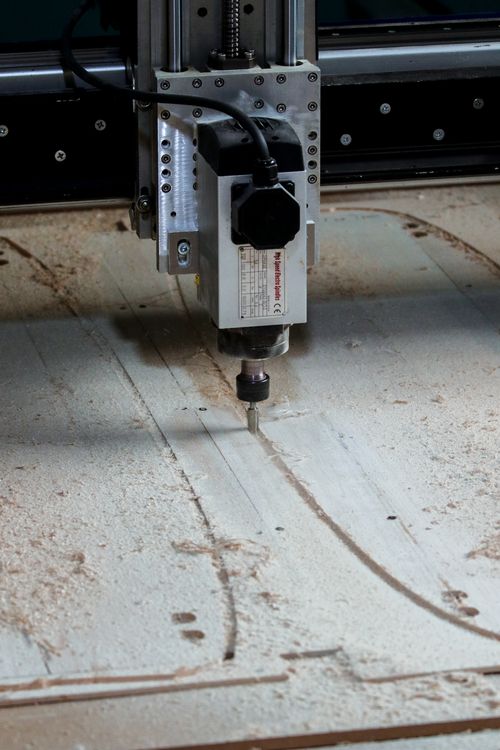
A display that requires difficult welds, excessive machining or several secondary operations may be expensive even when the raw material cost is modest. CAD and fabrication knowledge can help reshape parts so they are better suited to laser cutting, bending, CNC machining, routing or standard hardware.
Designing with the manufacturing process in mind often produces more consistent results and shorter production times.
Use Standard Components Where They Make Sense
Custom hardware can add both cost and lead time. Standard fasteners, feet, brackets, casters or shelf supports may provide the same performance with easier sourcing. The goal is not to eliminate custom design, but to use it only where it creates real value.
Consider Assembly and Installation Time
Labor can be a major part of a display program. A design that is quick to fabricate but slow to assemble may not actually be economical. Value engineering should consider shop assembly, flat-pack requirements, shipping, store installation and future service.
Simple locating features, fewer fastener types and clear assembly sequences can save significant time across a large rollout.
Protect the Shopper-Facing Experience
The best value-engineered solution keeps the elements that shoppers and retailers care about. Product visibility, brand graphics, stability and ease of use should remain protected. Savings are most effective when they are found in hidden structure, manufacturing method or unnecessary complexity rather than in the parts that create the display’s impact.
Review Cost Before Production Is Locked
Value engineering has the greatest effect before final drawings and tooling are released. At that point, geometry and manufacturing methods can still be adjusted without disrupting production.
By combining design intent with engineering and manufacturing knowledge, retail displays can become easier to build, easier to repeat and more cost-effective while still delivering the experience the original concept was meant to create.